


























AI-generated

Seoul Slim Flavor Week

Seven days of vibrant Korean classics with satisfying, weight-conscious portions and bold homemade flavor.

Recipes, pictures, and nutrition are AI-generated estimates.

Male 51 years 6'0" 2210 cal/day Lose weight Up to an hour Cooking for 3 people Art style: Comic Book

How this plan supports you

This seven-day Korean-inspired plan provides varied lean proteins from fish, poultry, beef, pork, tofu, eggs, and legumes, which can support fullness and help preserve muscle while you work toward weight loss within your 2,210-calorie target. Vegetables, seaweed, fruit, beans, and whole-grain choices such as brown rice add fiber and a range of vitamins and minerals that support digestive health and balanced meals. The variety of soups, rice bowls, wraps, grilled dishes, and snacks can make the plan satisfying and practical while keeping favorite Korean flavors central. Because kimchi, gochujang, soy-based sauces, and preserved foods can be higher in sodium, choosing lower-sodium options and moderating added sauces may help keep the overall pattern more balanced.

Food is the foundation. A GLP-1 can help when hunger fights you.

This meal plan is built to support your goal. Many people also use clinician-guided GLP-1 medications — such as semaglutide — through Okapy Care.

  • Quieter “food noise” and easier fullness between meals
  • Steadier appetite, which makes a calorie target more realistic
  • Works with a meal plan — not instead of one
See if GLP-1 care is right for you

Learn more www.okapycare.com

A licensed clinician decides eligibility.

Day 1

Breakfast
Kimchi Bokkeumbap with Fried Egg
Lunch
Dak Bulgogi Ssambap
Dinner
Doenjang Jjigae with Grilled Mackerel
Snack
Goguma Matang Cups

Nutrition totals

2210 calories
Protein 138g (25%)
Fat 82g (33%)
Carbs 230g (42%)

Day 2

Breakfast
Haemul Pajeon Breakfast Plate
Lunch
Bibimbap with Lean Beef
Dinner
Dak Galbi with Cabbage and Rice Cakes
Snack
Roasted Seaweed and Edamame

Nutrition totals

2220 calories
Protein 172g (31%)
Fat 72g (29%)
Carbs 221g (40%)

Day 3

Breakfast
Tteokguk with Egg Ribbons
Lunch
Kongguksu Soybean Noodles
Dinner
Samgyeopsal-Style Pork Lettuce Wraps
Snack
Baesuk Korean Pear Bowl

Nutrition totals

2205 calories
Protein 128g (23%)
Fat 77g (31%)
Carbs 250g (46%)

Day 4

Breakfast
Gyeran Mari with Kimchi Rice
Lunch
Jeyuk Bokkeum Rice Bowl
Dinner
Galbi Jjim with Root Vegetables
Snack
Injeolmi Bites

Nutrition totals

2214 calories
Protein 133g (24%)
Fat 82g (33%)
Carbs 236g (43%)

Day 5

Breakfast
Sundubu Jjigae with Rice
Lunch
Gimbap with Tuna and Vegetables
Dinner
Gochujang Salmon with Sesame Broccoli
Snack
Korean Melon and Pistachios

Nutrition totals

2209 calories
Protein 145g (26%)
Fat 85g (35%)
Carbs 216g (39%)

Day 6

Breakfast
Bulgogi Breakfast Kimbap
Lunch
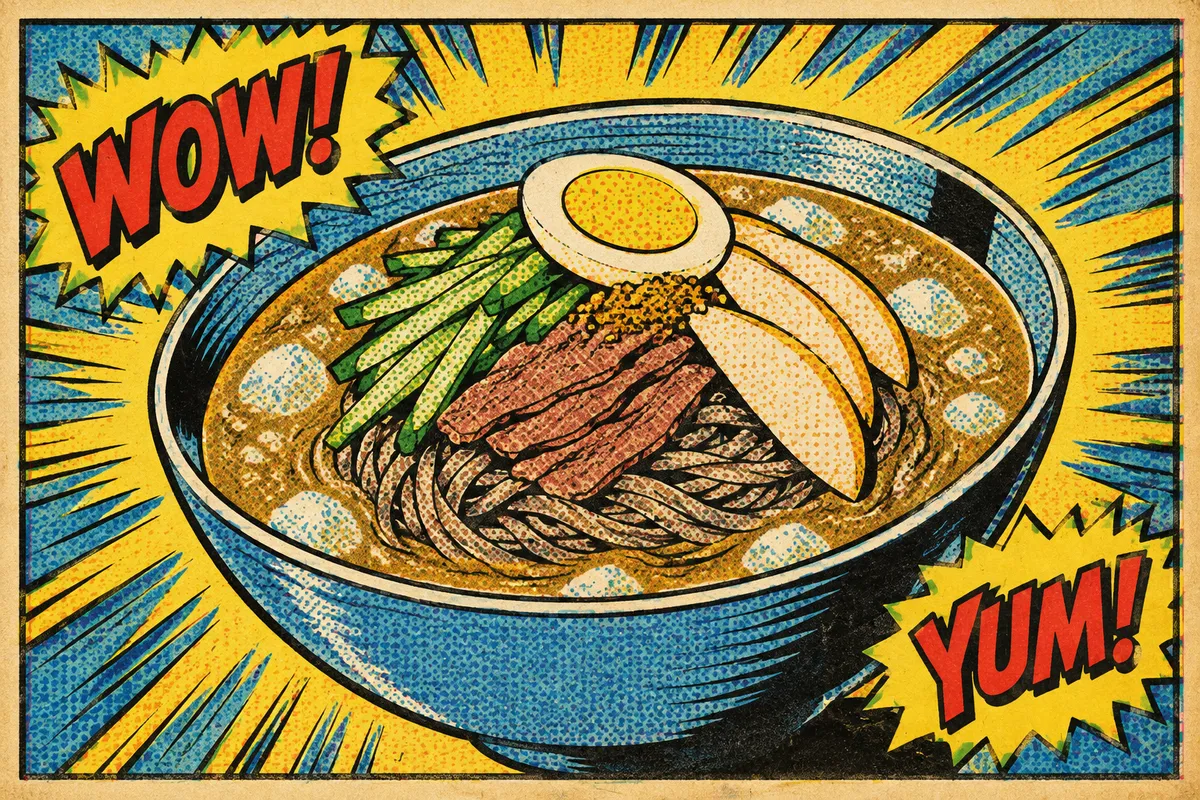
Mul Naengmyeon with Sliced Beef
Dinner
Ojingeo Bokkeum with Brown Rice
Snack
Misutgaru Protein Shake

Nutrition totals

2209 calories
Protein 172g (31%)
Fat 61g (25%)
Carbs 243g (44%)

Day 7

Breakfast
Kimchi Jeon with Soft Egg
Lunch
Dolsot Bibimbap with Tofu
Dinner
Andong Jjimdak
Snack
Yakgwa and Ginger Tea

Nutrition totals

2213 calories
Protein 122g (22%)
Fat 77g (31%)
Carbs 258g (47%)

Day 1

Nutrition totals

2210 calories
Protein 138g (25%)
Fat 82g (33%)
Carbs 230g (42%)
Kimchi Bokkeumbap with Fried Egg
Day 1 · Breakfast

Kimchi Bokkeumbap with Fried Egg

Savory kimchi fried rice tossed with tender lean pork, garlic, scallions, and sesame oil, crowned with a sunny fried egg.


Ingredients

Your portion: 1 bowl of fried rice topped with 1 egg (about 18 ounces)
Prepare: makes 3 serving(s)

Directions

  1. Break up any clumps in the chilled rice with clean hands or a fork, and set it beside the stove.
  2. Heat a large 12-inch skillet over medium heat for 2 minutes, then add 1 tablespoon sesame oil and swirl to coat the pan.
  3. Add the pork and cook over medium heat for 5 to 7 minutes, stirring every minute, until no pink remains and the thickest pieces reach 145°F; transfer the pork to a plate and let it rest.
  4. Add the garlic and kimchi to the same skillet and stir over medium heat for 2 minutes, until the kimchi is hot and lightly caramelized.
  5. Add the rice, gochujang, and soy sauce, then stir and toss continuously over medium heat for 5 to 6 minutes, until every grain is coated and the rice is steaming hot.
  6. Return the pork to the skillet, add 1 tablespoon sesame oil and half of the scallions, and stir for 1 minute; turn off the heat and divide the fried rice among 3 bowls.
  7. Wipe out the skillet carefully, heat it over medium-low heat, and add the remaining 3/4 tablespoon sesame oil until it shimmers, about 30 seconds.
  8. Crack the eggs into the skillet, cover it, and cook for 2 to 3 minutes until the whites are fully set and the yolks remain sunny and soft; do not flip the eggs.
  9. Place one fried egg on each bowl, scatter the remaining scallions over the top, and serve immediately.

Dak Bulgogi Ssambap
Day 1 · Lunch

Dak Bulgogi Ssambap

Sweet-savory grilled chicken bulgogi is served with warm brown rice, crisp lettuce cups, garlic, and spicy ssamjang for a satisfying Korean-style lunch.


Ingredients

Your portion: 4 lettuce wraps with about 2/3 cup bulgogi and rice
Prepare: makes 3 serving(s)

Directions

  1. Warm the cooked brown rice in a covered saucepan over low heat for 5 to 7 minutes, stirring once, until steaming; keep it covered off the heat.
  2. Whisk the soy sauce, gochujang, honey, sesame oil, minced garlic, and ssamjang together in a medium bowl until smooth.
  3. Add the sliced chicken and onion to the marinade and toss until every piece is coated; let it stand at room temperature for 15 minutes.
  4. Heat a large 12-inch skillet over medium-high heat for 2 minutes, until a drop of water sizzles immediately on contact.
  5. Add the chicken mixture to the hot skillet in a single layer; cook for 4 minutes without stirring so the chicken browns.
  6. Stir the chicken and onion, then cook for 4 to 6 minutes more, stirring every minute, until the onion is tender and the thickest chicken pieces reach 165°F and show no pink center.
  7. Rinse the lettuce leaves under cool water, drain them well, and pat them dry so the wraps stay crisp.
  8. Divide the warm rice and bulgogi among the lettuce leaves, then serve immediately with any pan juices spooned over the top.
Doenjang Jjigae with Grilled Mackerel
Day 1 · Dinner

Doenjang Jjigae with Grilled Mackerel

A deeply savory Korean soybean-paste stew with tender tofu, vegetables, and potatoes served alongside smoky grilled mackerel and warm rice.


Ingredients

Your portion: 1 bowl of stew (about 12 ounces), 1 mackerel fillet (about 5 ounces), and about 1/2 cup rice
Prepare: makes 3 serving(s)

Directions

  1. Cut the potatoes, zucchini, mushrooms, and tofu as directed, keeping each ingredient separate for easy cooking.
  2. Pat the mackerel fillets completely dry with paper towels and set them skin-side down on a plate.
  3. Stir the water, doenjang, minced garlic, and potatoes together in a 3-quart saucepan over high heat until the paste dissolves and the liquid reaches a boil, about 5 minutes.
  4. Reduce the saucepan heat to medium-low and simmer the potatoes uncovered until they are nearly tender when pierced with a fork, 8 to 10 minutes, stirring once halfway through.
  5. Add the tofu, zucchini, and mushrooms to the saucepan and simmer over medium-low heat until the zucchini is tender and the mushrooms have softened, 7 to 8 minutes; stir gently once to avoid breaking the tofu.
  6. Preheat the oven broiler to high with an oven rack 6 inches from the heating element, and line a broiler pan with foil.
  7. Brush the mackerel on both sides with the oil, place it skin-side up on the prepared pan, and broil until the skin is browned and the flesh flakes easily, 4 to 5 minutes; flip carefully and broil the other side for 2 to 3 minutes, then rest for 3 minutes.
  8. Divide the hot rice among 3 bowls, ladle the doenjang jjigae beside it, and serve one mackerel fillet with each portion.
Goguma Matang Cups
Day 1 · Snack

Goguma Matang Cups

Tender roasted sweet potato bites are coated in a glossy honey glaze and finished with toasted sesame seeds for a naturally sweet Korean-style treat.


Ingredients

Your portion: 1 cup
Prepare: makes 3 serving(s)

Directions

  1. Preheat the oven to 425°F and line a rimmed baking sheet with parchment paper.
  2. Peel the sweet potatoes and cut them into uniform 1-inch cubes so they cook evenly.
  3. Place the cubes in a large bowl, add the oil and salt, and toss until every piece is lightly coated.
  4. Arrange the sweet potato cubes in a single layer on the baking sheet, leaving a little space between pieces.
  5. Roast at 425°F for 15 minutes, then carefully flip the cubes with a spatula.
  6. Continue roasting for 10 to 15 minutes, until the cubes are fork-tender and browned on several sides.
  7. Transfer the hot sweet potato cubes to a large nonstick skillet, drizzle the honey over them, and cook over low heat for 2 to 3 minutes, stirring gently, until the glaze looks glossy and clings to the pieces.
  8. Sprinkle the sesame seeds over the glazed cubes, stir once, and let them rest for 3 minutes before dividing into 3 equal portions.

Day 2

Nutrition totals

2220 calories
Protein 172g (31%)
Fat 72g (29%)
Carbs 221g (40%)
Haemul Pajeon Breakfast Plate
Day 2 · Breakfast

Haemul Pajeon Breakfast Plate

Crisp Korean scallion pancakes packed with shrimp and squid, paired with tangy soy-vinegar sauce and juicy pineapple.


Ingredients

Your portion: 1 pancake with 1/3 of the dipping sauce and 1/2 cup pineapple
Prepare: makes 3 serving(s)

Directions

  1. Whisk the soy sauce and rice vinegar in a small bowl, then set the dipping sauce aside.
  2. Whisk the flour, cold water, and eggs in a large bowl until smooth and just combined; do not overmix.
  3. Pat the shrimp and squid dry with paper towels, then fold them and the scallions into the batter until evenly coated.
  4. Heat 1 1/2 tablespoons of the oil in a 10-inch nonstick skillet over medium-high heat until it shimmers, about 1 minute.
  5. Pour one-third of the batter into the skillet and spread it into an even round about 1/4 inch thick; cook for 4 to 5 minutes, until the bottom is deep golden and the edges look set.
  6. Flip the pancake carefully with a wide spatula and cook for 3 to 4 minutes, until the seafood is opaque, the center is firm, and the second side is crisp; transfer it to a plate and rest for 2 minutes.
  7. Repeat the cooking process twice with the remaining batter and oil, adding about 1 1/2 tablespoons of oil for each pancake and lowering the heat to medium if the bottoms brown too quickly.
  8. Cut each pancake into wedges and divide them among 3 plates with the soy-vinegar sauce.
  9. Serve each plate with 1/2 cup of pineapple chunks while the pancakes are hot and crisp.
Bibimbap with Lean Beef
Day 2 · Lunch

Bibimbap with Lean Beef

A colorful Korean rice bowl layered with savory lean bulgogi beef, tender seasoned vegetables, a fried egg, spicy gochujang, toasted sesame oil, and sesame seeds.


Ingredients

Your portion: 1 bowl (about 18 ounces)
Prepare: makes 3 serving(s)

Directions

  1. Place the sliced beef in a medium bowl and toss it with the garlic and 2 tablespoons of the soy sauce; let it stand at room temperature for 10 minutes while you prepare the skillet.
  2. Heat 1 tablespoon of the sesame oil in a large nonstick skillet over medium heat until it shimmers, about 1 minute.
  3. Add the mixed vegetables and cook for 5 to 7 minutes, stirring every minute, until the spinach is wilted, the mushrooms are tender, and the carrots can be pierced easily with a fork; transfer the vegetables to a plate.
  4. Heat the remaining 1/2 tablespoon sesame oil in the same skillet over medium-high heat for 30 seconds.
  5. Add the marinated beef and cook for 4 to 6 minutes, stirring and turning the slices often, until no pink remains and the thickest pieces reach at least 145°F; remove the beef from the heat and let it rest for 3 minutes.
  6. Warm the cooked rice in the covered skillet over low heat for 3 to 4 minutes, stirring once, until it is hot throughout.
  7. Fry the eggs in the same skillet over medium heat for 2 to 3 minutes, until the whites are fully set and the yolks remain slightly runny; carefully flip them for the final 20 seconds if you prefer firmer yolks.
  8. Divide the hot rice among 3 bowls and layer the vegetables and rested beef over the rice, leaving a space on top for one fried egg per bowl.
  9. Top each bowl with 1 tablespoon gochujang, drizzle the remaining 1 tablespoon soy sauce over the servings, and sprinkle evenly with sesame seeds before mixing everything together at the table.
Dak Galbi with Cabbage and Rice Cakes
Day 2 · Dinner

Dak Galbi with Cabbage and Rice Cakes

Tender spicy chicken is stir-fried with sweet potatoes, cabbage, chewy rice cakes, and fragrant perilla leaves in a glossy gochujang sauce.


Ingredients

Your portion: 1 bowl (about 20 ounces)
Prepare: makes 3 serving(s)

Directions

  1. Place the rice cakes in a bowl, cover them with warm water, and soak for 10 minutes; drain them thoroughly before cooking.
  2. Stir the gochujang, soy sauce, minced garlic, and 1/2 cup water together in a small bowl until smooth.
  3. Heat the sesame oil in a large 12-inch nonstick skillet or Dutch oven over medium-high heat until it shimmers, about 1 minute.
  4. Add the chicken in a single layer and cook over medium-high heat for 5 to 7 minutes, stirring every 1 to 2 minutes, until lightly browned and the thickest pieces reach 165°F; transfer the chicken to a clean plate.
  5. Add the sweet potato cubes to the skillet, pour in 1/2 cup water, cover, and cook over medium heat for 8 to 10 minutes, stirring once halfway through, until a fork can just pierce the centers.
  6. Add the cabbage and cooked chicken, stir well, and cook uncovered over medium heat for 3 to 4 minutes, until the cabbage begins to soften and the chicken is hot throughout.
  7. Add the drained rice cakes and gochujang sauce, stir to coat everything, and cook over medium heat for 5 to 7 minutes, stirring every 1 to 2 minutes, until the sauce thickens and the rice cakes are soft and chewy.
  8. Turn off the heat, fold in the sliced perilla leaves, rest the dak galbi for 2 minutes, and divide it into three bowls while hot.
Roasted Seaweed and Edamame
Day 2 · Snack

Roasted Seaweed and Edamame

Toasty Korean gim sheets accompany warm, lightly salted edamame tossed with nutty sesame oil and a gentle gochugaru kick.


Ingredients

Your portion: 1 cup edamame with 2 toasted gim sheets (about 8 ounces)
Prepare: makes 3 serving(s)

Directions

  1. Preheat the oven to 300°F and place a rack in the center position.
  2. Arrange the gim sheets in a single layer on an ungreased baking sheet.
  3. Bake the gim for 3 to 4 minutes, until fragrant and crisp but not browned.
  4. Remove the gim from the oven and let it cool on the baking sheet for 2 minutes.
  5. Place the frozen edamame in a microwave-safe bowl with 2 tablespoons of water, cover loosely, and microwave on high for 4 to 5 minutes, stirring once halfway through, until hot and tender.
  6. Drain the edamame thoroughly in a colander and shake off excess water.
  7. Toss the hot edamame with the sesame oil, kosher salt, and gochugaru until evenly coated.
  8. Break each cooled gim sheet into large pieces and divide the edamame and gim evenly among 3 bowls.
  9. Serve immediately, using the crisp gim pieces to scoop up the warm edamame.

Day 3

Nutrition totals

2205 calories
Protein 128g (23%)
Fat 77g (31%)
Carbs 250g (46%)
Tteokguk with Egg Ribbons
Day 3 · Breakfast

Tteokguk with Egg Ribbons

Tender Korean rice cakes simmered with lean beef, garlic, and scallions in a savory broth, then finished with silky egg ribbons, sesame, and roasted seaweed.


Ingredients

Your portion: 1 bowl (about 20 ounces)
Prepare: makes 3 serving(s)

Directions

  1. Whisk the eggs in a medium bowl until the yolks and whites are fully blended, about 30 seconds, then set the bowl aside.
  2. Rinse the rice cakes under cold running water for 30 seconds and drain them well; if they are frozen and stuck together, soak them in cold water for 10 minutes, separate them, and drain.
  3. Heat the toasted sesame oil in a large heavy pot over medium heat for 1 minute, then add the beef and garlic and cook for 3 to 4 minutes, stirring often, until the beef is no longer pink.
  4. Pour in the beef broth and soy sauce, raise the heat to high, and bring the liquid to a full boil, about 5 minutes.
  5. Add the drained rice cakes, reduce the heat to medium, and simmer uncovered for 5 to 7 minutes, stirring once or twice, until the rice cakes are tender and the broth lightly thickens.
  6. Pour the beaten eggs into the simmering soup in a slow, thin stream while gently dragging a fork through the liquid; stop stirring and cook for 45 to 60 seconds, until the egg ribbons are set.
  7. Turn off the heat, stir in two-thirds of the sliced scallions, and let the soup rest for 2 minutes so the rice cakes finish softening.
  8. Divide the soup among 3 bowls and top each bowl with the remaining scallions, sesame seeds, and roasted seaweed strips; serve hot.
Kongguksu Soybean Noodles
Day 3 · Lunch

Kongguksu Soybean Noodles

Chilled Korean wheat noodles rest in a creamy blended soybean broth with crisp cucumber, juicy tomato, toasted sesame seeds, and a tender boiled egg.


Ingredients

Your portion: 1 bowl (about 20 ounces)
Prepare: makes 3 serving(s)

Directions

  1. Place the eggs in a medium saucepan, cover them with 1 inch of cold water, and bring the water to a full boil over high heat.
  2. Reduce the heat to medium, boil the eggs for 10 minutes, then transfer them to a bowl of ice water for 5 minutes; peel and halve each egg.
  3. Blend the drained soybeans, ice-cold water, and kosher salt on high speed for 1 to 2 minutes, until the broth is completely smooth and creamy.
  4. Refrigerate the blended soybean broth for at least 20 minutes so it is thoroughly chilled.
  5. Bring 4 quarts of water to a rolling boil over high heat in a large pot.
  6. Add the wheat noodles, stir immediately, and cook for 3 to 4 minutes until tender but still springy, following the package timing if different.
  7. Drain the noodles and rinse them under cold running water for 30 seconds, gently separating them with your fingers, then drain thoroughly.
  8. Slice the cucumber and dice the tomatoes while the broth and noodles are chilling and cooling.
  9. Divide the noodles among 3 bowls, pour about 1 1/3 cups chilled soybean broth over each bowl, and top each with cucumber, tomato, 1 egg half, and 1 tablespoon toasted sesame seeds.
Samgyeopsal-Style Pork Lettuce Wraps
Day 3 · Dinner

Samgyeopsal-Style Pork Lettuce Wraps

Juicy grilled pork belly-style slices are served with warm brown rice, crisp lettuce, fragrant perilla leaves, tangy kimchi, garlic, and spicy ssamjang for classic Korean wraps.


Ingredients

Your portion: 1 plate with 1/3 of the pork, 3/4 cup brown rice, 2 cups lettuce, 6 perilla leaves, 1/2 cup kimchi, and 3 tablespoons ssamjang
Prepare: makes 3 serving(s)

Directions

  1. Warm the cooked brown rice in a covered microwave-safe bowl for 2 to 3 minutes, stirring once halfway through, until steaming; keep covered.
  2. Rinse the lettuce and perilla leaves under cool water, then dry them thoroughly with a clean towel so the wraps will not be watery.
  3. Rub the minced garlic evenly over both sides of the pork slices and let them stand at room temperature for 10 minutes.
  4. Heat a large grill pan or cast-iron skillet over medium-high heat for 3 to 4 minutes, until a drop of water sizzles and evaporates immediately.
  5. Grill the pork in a single layer, working in batches if needed, for 3 to 4 minutes on the first side until browned and the edges begin to crisp.
  6. Flip the pork and grill for 2 to 3 minutes more, until browned and the thickest pieces reach 145°F on an instant-read thermometer.
  7. Transfer the cooked pork to a cutting board and rest it for 3 minutes, then cut larger slices into bite-size pieces.
  8. Divide the rice, pork, lettuce, perilla leaves, kimchi, and ssamjang among 3 plates, then spoon rice, pork, kimchi, and a little ssamjang into each leaf and fold it into a wrap.
Baesuk Korean Pear Bowl
Day 3 · Snack

Baesuk Korean Pear Bowl

Tender Korean pear slices gently simmered with ginger, cinnamon, and honey, then finished with crunchy walnuts for a fragrant warm snack.


Ingredients

Your portion: 1 bowl (about 10 ounces)
Prepare: makes 3 serving(s)

Directions

  1. Rinse the pears under cool water, peel them, cut them into quarters, remove the cores, and slice each quarter into thin wedges.
  2. Place the pear wedges, water, ginger, and cinnamon stick in a 3-quart saucepan.
  3. Bring the mixture to a gentle boil over medium-high heat, about 6 to 8 minutes.
  4. Reduce the heat to low, cover the saucepan, and simmer for 10 to 12 minutes, stirring gently once halfway through, until the pear slices are tender but still hold their shape.
  5. Remove the saucepan from the heat and let the pear mixture stand uncovered for 3 minutes so it cools slightly and the flavors settle.
  6. Remove the cinnamon stick and ginger slices with a slotted spoon.
  7. Stir in the honey until it dissolves completely into the warm pear broth.
  8. Divide the pears and broth among 3 bowls, then sprinkle each bowl with the chopped walnuts and serve warm.

Day 4

Nutrition totals

2214 calories
Protein 133g (24%)
Fat 82g (33%)
Carbs 236g (43%)
Gyeran Mari with Kimchi Rice
Day 4 · Breakfast

Gyeran Mari with Kimchi Rice

Tender rolled eggs layered with colorful carrots and scallions accompany a modest, savory bowl of kimchi-seasoned rice.


Ingredients

Your portion: 1 rolled omelet with 1 bowl of kimchi rice, about 16 oz total
Prepare: makes 3 serving(s)

Directions

  1. Finely dice the carrots, slice the scallions, chop the kimchi, and crack the eggs into a large bowl; beat the eggs with the salt until the yolks and whites are fully blended, about 30 seconds.
  2. Heat 1 tablespoon of the neutral oil in a large nonstick skillet over medium heat, about 350°F, until it shimmers; add the carrots and cook, stirring every 30 seconds, until slightly softened, about 4 minutes.
  3. Stir in the scallions and cook for 1 minute, then transfer half of the cooked vegetables to a small bowl for the egg rolls, leaving the other half in the skillet.
  4. Add the kimchi, cooked rice, and soy sauce to the skillet; stir continuously over medium heat until the rice is hot, the kimchi is fragrant, and the grains are evenly seasoned, 4 to 5 minutes.
  5. Stir the toasted sesame oil into the kimchi rice, turn the heat to low, and cover the skillet to keep the rice warm while you cook the eggs.
  6. Wipe out the skillet, add the remaining 1 tablespoon neutral oil, and heat over medium-low, about 300°F, until the oil lightly shimmers.
  7. Pour one-third of the beaten eggs into the skillet and tilt it to spread the eggs thinly; sprinkle one-third of the reserved carrots and scallions over the surface, cook until the edges are set and the top is still slightly wet, about 1 1/2 minutes, then roll the omelet from one side to the other with a spatula and cook seam-side down for 20 seconds; repeat twice with the remaining eggs and vegetables.
  8. Rest the three rolled omelets for 2 minutes, then slice each into thick pieces with a sharp knife.
  9. Divide the kimchi rice among 3 bowls and place one sliced egg roll beside each bowl; serve hot.
Jeyuk Bokkeum Rice Bowl
Day 4 · Lunch

Jeyuk Bokkeum Rice Bowl

Tender spicy gochujang-glazed pork is stir-fried with sweet onions and cabbage, then served over fluffy rice with a cool, tangy cucumber salad.


Ingredients

Your portion: 1 bowl with one-third of the cucumber salad
Prepare: makes 3 serving(s)

Directions

  1. Place the sliced cucumber in a medium bowl, toss it with 1 tablespoon of the rice vinegar, and refrigerate it while you cook the pork.
  2. Whisk the gochujang, soy sauce, remaining 2 tablespoons rice vinegar, and minced garlic in a small bowl until smooth.
  3. Heat a large 12-inch skillet over medium-high heat for 2 minutes, then add the sesame oil and heat it until it shimmers.
  4. Add the pork to the hot skillet in a single layer, working in two batches if necessary, and stir-fry each batch for 4 to 6 minutes until browned and no longer pink in the center; pork should reach 145°F, then rest for 3 minutes.
  5. Return all the pork to the skillet, add the sliced onion, and stir-fry over medium-high heat for 2 minutes until the onion begins to soften.
  6. Add the shredded cabbage and stir-fry for 2 to 3 minutes until it is slightly wilted but still has some crunch.
  7. Pour the gochujang sauce over the pork and vegetables, reduce the heat to medium, and stir constantly for 1 to 2 minutes until the sauce coats everything and lightly bubbles.
  8. Warm the cooked rice in a covered saucepan over low heat for 4 to 5 minutes, stirring once, until steaming hot.
  9. Divide the rice among 3 bowls, top with the spicy pork and vegetables, and serve each bowl with one-third of the chilled cucumber salad.
Galbi Jjim with Root Vegetables
Day 4 · Dinner

Galbi Jjim with Root Vegetables

Tender beef short ribs braised with carrots, daikon, potatoes, and dates in a glossy soy-garlic sauce.


Ingredients

Your portion: 1 bowl, about 14 ounces
Prepare: makes 3 serving(s)

Directions

  1. Pat the beef dry with paper towels and prepare the carrots, daikon, potatoes, dates, garlic, and ginger as listed; keep the vegetables separate so they can be added at different times.
  2. Heat the sesame oil in a 5-quart Dutch oven over medium-high heat until shimmering, about 1 minute, then sear the beef in a single layer for 2 to 3 minutes per side until browned; work in batches if needed and transfer the browned beef to a plate.
  3. Add the garlic and ginger to the same pot over medium heat and stir for 30 seconds, just until fragrant without letting them brown.
  4. Pour in the soy sauce and water, add the chopped dates, and scrape the browned bits from the bottom of the pot with a wooden spoon.
  5. Return the beef and any collected juices to the pot, bring the liquid to a full boil over high heat, then reduce the heat to low.
  6. Cover the pot and simmer the beef for 25 minutes, stirring once halfway through, until the beef is beginning to become tender and the liquid is gently bubbling.
  7. Add the carrots, daikon, and potatoes, cover again, and simmer over low heat for 18 to 20 minutes, stirring once, until a fork slides easily into the vegetables and the beef is tender.
  8. Remove the lid, raise the heat to medium, and simmer for 5 to 8 minutes, stirring occasionally, until the sauce thickly coats the beef and vegetables with a glossy finish.
  9. Turn off the heat and let the galbi jjim rest uncovered for 5 minutes, then divide it into 3 bowls and spoon the sauce over each serving.
Injeolmi Bites
Day 4 · Snack

Injeolmi Bites

Soft, chewy Korean rice cake bites coated in nutty roasted soybean powder, served with a small cup of refreshing barley tea.


Ingredients

Your portion: 1 bowl of bite-size rice cake pieces with 8 fluid ounces barley tea
Prepare: makes 3 serving(s)

Directions

  1. Bring 3 cups of the water to a boil in a kettle or saucepan, pour it over the 3 barley tea bags in a heatproof pitcher, and steep for 5 minutes; remove the tea bags and let the tea cool slightly.
  2. Whisk the glutinous rice flour, sugar, and salt together in a microwave-safe bowl.
  3. Pour the remaining 1/2 cup water into the flour mixture and stir with a sturdy spoon until no dry pockets remain.
  4. Cover the bowl loosely with a microwave-safe lid or vented plastic wrap, then microwave on high for 2 minutes; carefully remove the hot cover.
  5. Stir the thickened dough vigorously for 1 minute, cover it again, and microwave on high for 1 more minute, until the dough is glossy, very sticky, and cooked through.
  6. Let the dough rest uncovered for 5 minutes, then use a wet spoon or wet kitchen scissors to divide it into 3 equal portions and cut each portion into bite-size pieces.
  7. Place the roasted soybean powder in a shallow bowl and roll each warm rice cake piece through it until completely coated.
  8. Divide the injeolmi among 3 small bowls and serve each bowl with about 8 fluid ounces of barley tea; eat the rice cakes while soft and warm.

Day 5

Nutrition totals

2209 calories
Protein 145g (26%)
Fat 85g (35%)
Carbs 216g (39%)
Sundubu Jjigae with Rice
Day 5 · Breakfast

Sundubu Jjigae with Rice

Silky soft tofu, lean ground beef, zucchini, mushrooms, and gently poached eggs simmer in a spicy kimchi broth and arrive with fluffy Korean short-grain rice.


Ingredients

Your portion: About 2 cups stew with 1 cup cooked rice
Prepare: makes 3 serving(s)

Directions

  1. Drain the tofu in a colander, slice the zucchini, slice the mushrooms, and roughly chop the kimchi before heating the pan.
  2. Rinse the rice under cold water until the water runs mostly clear, place it in a medium saucepan with 1 1/4 cups water, and bring it to a boil over high heat.
  3. Cover the rice, reduce the heat to low, cook for 15 minutes, then turn off the heat and let it rest covered for 10 minutes.
  4. Heat the sesame oil in a 4-quart pot over medium heat until it shimmers, about 1 minute, then add the ground beef and cook for 5 to 6 minutes, stirring and breaking it into small pieces until no pink remains and the beef reaches 160°F.
  5. Stir the kimchi and gochugaru into the beef over medium heat for 2 minutes, until the kimchi softens and the mixture smells fragrant.
  6. Pour in the beef broth, bring it to a gentle boil over medium-high heat, then reduce the heat to medium-low and simmer uncovered for 5 minutes.
  7. Add the tofu, zucchini, and mushrooms, gently spooning broth over the tofu, and simmer uncovered for 6 to 8 minutes until the zucchini is tender-crisp and the mushrooms are softened.
  8. Crack the eggs into separate areas of the simmering stew, cover the pot, and cook over medium-low heat for 4 to 5 minutes until the whites are set and the yolks are still slightly soft.
  9. Fluff the rested rice with a fork, divide it among 3 bowls, ladle the sundubu jjigae alongside or over the rice, and serve immediately.
Gimbap with Tuna and Vegetables
Day 5 · Lunch

Gimbap with Tuna and Vegetables

Sliced Korean seaweed rice rolls filled with creamy tuna, tender egg, spinach, crisp vegetables, and pickled radish, served with a savory soy dipping sauce.


Ingredients

Your portion: 1 roll, sliced into 8 pieces, with about 1 tablespoon dipping sauce
Prepare: makes 3 serving(s)

Directions

  1. Drain the tuna thoroughly, place it in a bowl with the mayonnaise, and stir until evenly combined; set it aside.
  2. Heat a 10-inch nonstick skillet over medium heat for 1 minute, whisk the eggs in a bowl, pour them into the skillet, and cook until mostly set, about 2 minutes; flip the egg sheet, cook 30 seconds more, transfer it to a plate, rest 5 minutes, and cut it into long strips.
  3. Add the carrots to the dry skillet over medium heat and cook for 3 to 4 minutes, stirring every 30 seconds, until slightly softened but still firm; transfer them to a plate.
  4. Add the spinach to the skillet over medium heat and cook for 1 to 2 minutes, stirring constantly, until wilted; transfer it to a plate and squeeze out excess moisture after it is cool enough to handle.
  5. Cut the cucumber and pickled radish into thin sticks, and place the cucumber, radish, carrots, spinach, egg strips, and tuna mixture near your work surface.
  6. Place 1 sheet of gim shiny-side down on a bamboo mat or clean piece of parchment, spread 1 1/4 cups rice over the sheet while leaving a 1-inch strip clear at the far edge, and arrange one-third of each filling in a horizontal line across the lower third.
  7. Lift the near edge over the filling, press firmly to form a tight cylinder, continue rolling toward the clear edge, and press the seam closed; repeat with the remaining sheets and fillings.
  8. Rest the rolls seam-side down for 2 minutes, slice each roll into 8 pieces with a lightly dampened sharp knife, and serve with the Korean soy dipping sauce.
Gochujang Salmon with Sesame Broccoli
Day 5 · Dinner

Gochujang Salmon with Sesame Broccoli

Roasted salmon coated in a sweet-spicy gochujang, garlic, and honey glaze is served with tender sesame broccoli and hearty multigrain rice.


Ingredients

Your portion: 1 salmon fillet with 3/4 cup multigrain rice and 1/3 of the broccoli
Prepare: makes 3 serving(s)

Directions

  1. Preheat the oven to 425°F and line a large rimmed baking sheet with parchment paper.
  2. Toss the broccoli florets with the toasted sesame oil directly on the baking sheet, spread them in one layer, and roast at 425°F for 10 minutes until they begin to brown at the edges.
  3. Stir the gochujang, honey, soy sauce, and minced garlic in a small bowl until smooth.
  4. Pat the salmon dry with paper towels, place the fillets skin-side down beside the broccoli, and brush each fillet with half of the gochujang glaze.
  5. Roast the salmon and broccoli for 8 minutes, then turn the broccoli with a spatula so it cooks evenly.
  6. Brush the salmon with the remaining glaze and continue roasting for 2 to 5 minutes, until the salmon flakes easily and reaches 145°F in the thickest part and the broccoli is tender-crisp.
  7. Warm the cooked multigrain rice in a covered microwave-safe bowl for 2 to 3 minutes, stirring once halfway through, until steaming hot.
  8. Remove the salmon and broccoli from the oven, sprinkle the sesame seeds over the broccoli, and let the salmon rest for 3 minutes.
  9. Divide the rice and broccoli among 3 plates, top each plate with one salmon fillet, and spoon any glaze from the baking sheet over the salmon.
Korean Melon and Pistachios
Day 5 · Snack

Korean Melon and Pistachios

Chilled sweet chamoe melon slices paired with crunchy pistachios for a refreshing Korean-inspired snack with creamy, nutty contrast.


Ingredients

Your portion: 1 bowl (1 cup melon with about 5/6 ounce pistachios)
Prepare: makes 3 serving(s)

Directions

  1. Rinse the Korean melons under cool running water and pat them dry with a clean towel.
  2. Trim off both ends of each melon with a sharp knife.
  3. Cut the melons in half lengthwise and scoop out the seeds with a spoon.
  4. Slice the melon halves crosswise into thin, bite-size pieces, leaving the peel on if it is tender.
  5. Divide the melon slices evenly among 3 small bowls.
  6. Measure the pistachios and divide them evenly among the bowls.
  7. Chill the bowls for 15 to 20 minutes, then serve the melon cold with the pistachios on the side or scattered over the slices.

Day 6

Nutrition totals

2209 calories
Protein 172g (31%)
Fat 61g (25%)
Carbs 243g (44%)
Bulgogi Breakfast Kimbap
Day 6 · Breakfast

Bulgogi Breakfast Kimbap

A hearty Korean seaweed roll packed with sweet-savory bulgogi, fluffy egg, tender spinach, carrots, warm rice, and crisp pickled radish.


Ingredients

Your portion: 1 large kimbap roll, cut into 8 pieces
Prepare: makes 3 serving(s)

Directions

  1. Place the beef in a bowl with the soy sauce, brown sugar, and sesame oil, toss until evenly coated, and refrigerate for 15 to 30 minutes.
  2. Warm the cooked rice in a covered microwave-safe bowl on high for 1 to 2 minutes, stirring once, until hot but not steaming excessively; let it cool for 5 minutes so it will not soften the seaweed.
  3. Place the spinach in a microwave-safe bowl and microwave on high for 60 to 90 seconds, until wilted; cool it briefly and squeeze out as much moisture as possible.
  4. Heat a dry 10-inch nonstick skillet over medium heat, add the shredded carrot, and cook for 3 to 4 minutes, stirring every minute, until slightly softened; transfer it to a plate.
  5. Beat the eggs in a bowl, pour them into the same skillet over medium-low heat, and cook for 2 to 3 minutes until mostly set; flip, cook for 30 seconds more, then transfer to a board and cut into strips.
  6. Increase the skillet heat to medium-high, add the marinated beef, and stir-fry for 5 to 7 minutes until browned, no longer pink inside, and at least 145°F in the thickest pieces; transfer it to a plate and rest for 3 minutes.
  7. Place one seaweed sheet shiny-side down on a clean cutting board, spread one-third of the rice over it while leaving a 1-inch border at the far edge, and arrange one-third each of the beef, egg, spinach, carrot, and pickled radish in a horizontal line across the lower third.
  8. Roll the seaweed tightly from the near edge over the filling, tuck the filling in with your fingers, and continue rolling until the seam is underneath; repeat with the remaining sheets and fillings.
  9. Rest the rolls for 2 minutes, then slice each into 8 pieces with a sharp knife lightly dampened between cuts and serve warm or at room temperature.
Mul Naengmyeon with Sliced Beef
Day 6 · Lunch

Mul Naengmyeon with Sliced Beef

Chilled buckwheat noodles sit in a tangy, savory beef broth with tender sirloin, crisp cucumber, sweet Korean pear, egg, and mustard.


Ingredients

Your portion: 1 bowl (about 3 cups)
Prepare: makes 3 serving(s)

Directions

  1. Place the eggs in a saucepan and cover them with 1 inch of cold water; bring the water to a full boil over high heat, reduce to medium-low to maintain a steady boil, cook for 9 minutes, then transfer the eggs to cold water for 5 minutes.
  2. Whisk the beef broth, rice vinegar, soy sauce, mustard, and sesame oil in a large saucepan over medium heat until steaming but not boiling, about 3 minutes.
  3. Add the sliced beef to the hot broth and maintain a gentle simmer over medium-low heat until the beef is opaque and reaches 145°F in the thickest piece, about 3 to 5 minutes; remove the beef with tongs and rest it for 5 minutes.
  4. Set the saucepan of broth in a larger bowl of ice water and stir for 2 minutes, then refrigerate the broth until thoroughly chilled, at least 15 minutes and preferably below 40°F.
  5. Bring a large pot of water to a rolling boil over high heat, add the naengmyeon noodles, and cook according to the package directions, usually 3 to 4 minutes, stirring once after 30 seconds and again halfway through.
  6. Drain the noodles in a colander and rinse them under cold running water for 1 minute, gently separating them with your fingers; drain thoroughly.
  7. Peel the cooled eggs and cut them in half, then cut the cucumber into thin matchsticks and the pear into thin slices.
  8. Slice the rested beef into thin strips against the grain, watching for any remaining pieces that are pinker than desired and returning them to the hot broth briefly if needed.
  9. Divide the noodles among 3 bowls, pour the chilled broth over them, and arrange the beef, cucumber, pear, and egg halves on top before serving immediately.
Ojingeo Bokkeum with Brown Rice
Day 6 · Dinner

Ojingeo Bokkeum with Brown Rice

Tender squid and crisp cabbage, onions, and carrots are coated in a savory gochujang sauce and served over nutty brown rice with toasted sesame flavor.


Ingredients

Your portion: 1 bowl (about 18 oz)
Prepare: makes 3 serving(s)

Directions

  1. Rinse the brown rice under cool running water until the water is mostly clear, then drain it well.
  2. Combine the rinsed rice with 2 2/3 cups water in a medium saucepan and bring it to a boil over high heat. Cover, reduce the heat to low, and simmer for 35 to 40 minutes until the water is absorbed and the grains are tender; remove from the heat and let it stand covered for 10 minutes.
  3. Pat the squid very dry with paper towels, then slice the bodies into 1/2-inch rings and cut any large tentacles into smaller pieces.
  4. Stir the gochujang, soy sauce, and minced garlic together in a small bowl until smooth.
  5. Heat the sesame oil in a large wok or 12-inch skillet over medium-high heat until it shimmers, about 1 minute.
  6. Add the cabbage, onion, and carrots and stir-fry for 4 to 5 minutes, stirring every 30 seconds, until the vegetables are bright and just tender but still slightly crisp.
  7. Add the squid and gochujang mixture, then stir-fry for 2 to 3 minutes until the squid is opaque, curled, and reaches 145°F in the thickest piece; do not continue cooking after it reaches that temperature.
  8. Fluff the rice with a fork, divide it among 3 bowls, spoon the squid and vegetables over the rice, and sprinkle each bowl with the sesame seeds before serving immediately.
Misutgaru Protein Shake
Day 6 · Snack

Misutgaru Protein Shake

A cool, creamy Korean-style shake blending nutty roasted grain powder with skim milk, banana, ice, and tangy Greek yogurt.


Ingredients

Your portion: 1 glass (about 18 oz)
Prepare: makes 3 serving(s)

Directions

  1. Peel the banana and cut it into 1-inch pieces on a clean cutting board.
  2. Add the skim milk, Greek yogurt, banana pieces, misutgaru, and ice to a blender in that order.
  3. Secure the blender lid and blend on low speed for 10 seconds to start combining the ingredients.
  4. Increase to high speed and blend for 45 to 60 seconds, until the shake is smooth, thick, and no ice pieces remain.
  5. Stop the blender and check the texture; blend for 10 more seconds if any grain powder or ice remains around the sides.
  6. Pour the shake evenly into 3 tall glasses, about 18 ounces each, and serve immediately while thoroughly chilled.

Day 7

Nutrition totals

2213 calories
Protein 122g (22%)
Fat 77g (31%)
Carbs 258g (47%)
Kimchi Jeon with Soft Egg
Day 7 · Breakfast

Kimchi Jeon with Soft Egg

Crispy-edged kimchi and scallion pancakes are topped with softly cooked eggs and served with fresh apple for a savory-sweet Korean breakfast.


Ingredients

Your portion: 1 kimchi jeon with 1 soft egg and about 14 ounces sliced apple
Prepare: makes 3 serving(s)

Directions

  1. Drain the kimchi well, finely chop it, and thinly slice the scallions; reserve 3 tablespoons of scallions for serving.
  2. Whisk the flour, cold water, 3 eggs, soy sauce, and sesame oil in a large bowl until smooth, then stir in the chopped kimchi and remaining scallions until evenly distributed.
  3. Heat a 12-inch nonstick skillet over medium heat, about 350°F at the pan surface, and add 2 teaspoons of the neutral oil until it shimmers.
  4. Pour one-third of the batter into the skillet and spread it into an 8-inch round layer; cook until the edges look crisp and the center is mostly set, 3 to 4 minutes.
  5. Flip the pancake with a wide spatula and cook until the second side is browned and crisp, 2 to 3 minutes; transfer it to a plate and repeat with the remaining batter and 4 teaspoons more oil to make 3 pancakes.
  6. Wipe out any loose crumbs, return the skillet to medium-low heat, and add the remaining 1 tablespoon neutral oil.
  7. Crack the remaining 3 eggs into the skillet, cover, and cook until the whites are fully set but the yolks still jiggle softly, 2 to 3 minutes; avoid flipping the eggs.
  8. Place one pancake on each plate, top each with one soft egg, scatter with the reserved scallions, and serve with the sliced apple.
Dolsot Bibimbap with Tofu
Day 7 · Lunch

Dolsot Bibimbap with Tofu

Crispy tofu, tender vegetables, steamed rice, and a sunny egg crackle together in a hot stone bowl under a spicy-sweet gochujang sauce.


Ingredients

Your portion: 1 stone bowl (about 18 ounces)
Prepare: makes 3 serving(s)

Directions

  1. Drain the tofu, wrap it in a clean towel, press gently for 5 minutes to remove excess moisture, then cut it into 1-inch cubes; slice the mushrooms and set all vegetables nearby.
  2. Toss the tofu cubes with 1 tablespoon soy sauce, then let them stand for 5 minutes while you heat a large nonstick skillet over medium-high heat, about 375°F.
  3. Add 1 tablespoon sesame oil to the skillet and fry the tofu for 8 to 10 minutes, turning every 2 minutes, until several sides are deep golden and crisp; transfer it to a plate.
  4. Add the mushrooms, carrots, bean sprouts, and spinach to the same skillet and cook over medium heat for 4 to 5 minutes, stirring every minute, until the mushrooms are tender, the sprouts are hot, and the spinach is wilted; transfer the vegetables to a plate.
  5. Crack the eggs into the skillet and cook over medium heat for 3 to 4 minutes, without flipping, until the whites are fully set and the yolks remain slightly runny; turn off the heat.
  6. Stir the gochujang with the remaining 1 tablespoon soy sauce in a small bowl until smooth, then set the sauce beside the serving bowls.
  7. Divide the cooked rice among three heat-safe dolsot stone bowls, drizzle the remaining 1 tablespoon sesame oil evenly over the rice, and heat the bowls over medium heat for 5 to 7 minutes until the rice audibly sizzles and a crisp crust begins forming; use a burner-safe stone pot and increase the heat gradually to prevent cracking.
  8. Arrange the tofu, vegetables, and one fried egg in sections over each sizzling bowl, then spoon the gochujang sauce over the top.
  9. Serve immediately after placing the bowls on heatproof mats, and stir each bowl thoroughly at the table so the sauce coats the rice and the crisp bottom loosens; let each bowl rest for 1 minute before eating if the steam is intense.
Andong Jjimdak
Day 7 · Dinner

Andong Jjimdak

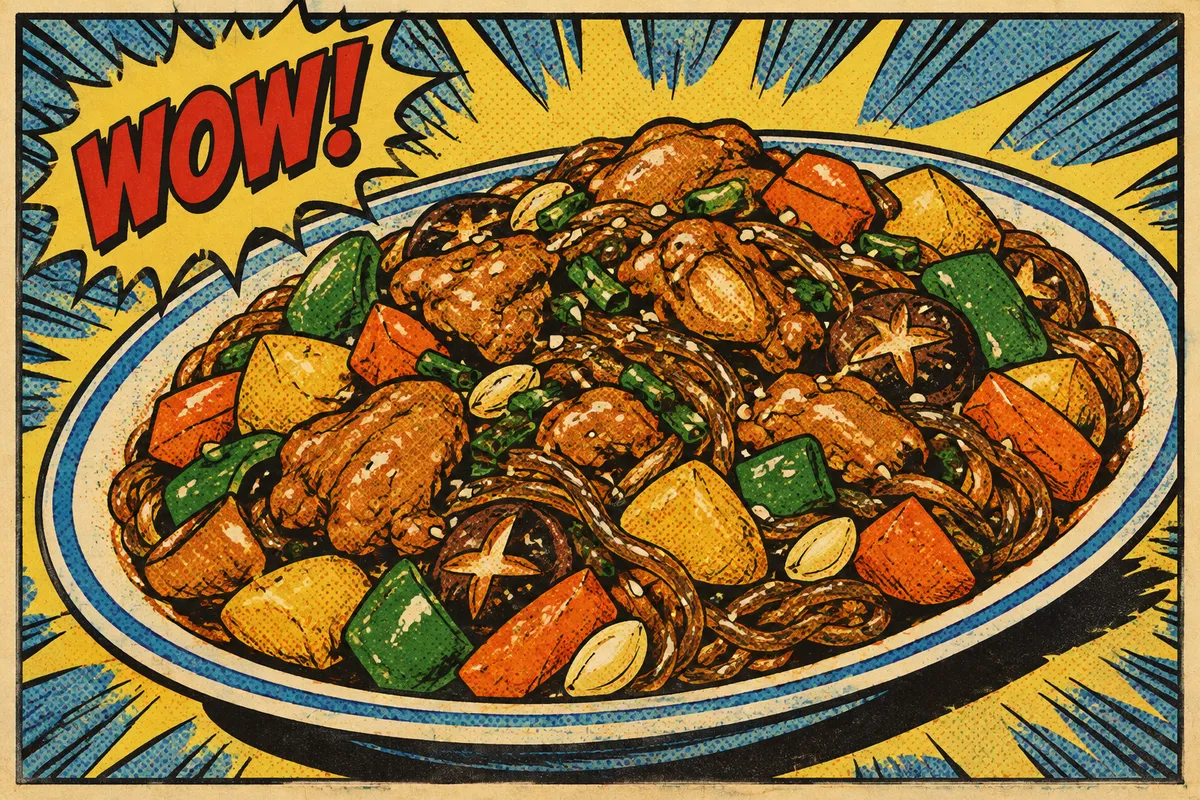
Tender chicken, chewy glass noodles, and colorful vegetables simmered in a savory, garlic-forward Korean soy sauce until glossy and deeply flavorful.


Ingredients

Your portion: 1 bowl (about 18 ounces)
Prepare: makes 3 serving(s)

Directions

  1. Place the dry glass noodles in a large bowl, cover them with warm water, and soak for 20 minutes until flexible; drain them thoroughly in a colander.
  2. Cut the chicken into 2-inch pieces, cut the potatoes and carrots into 1-inch chunks, slice the mushrooms and bell peppers, and mince the garlic.
  3. Stir the soy sauce, brown sugar, minced garlic, and 2 cups water together in a bowl until the sugar dissolves.
  4. Heat the sesame oil in a large Dutch oven or deep pot over medium-high heat until it shimmers, about 1 minute, then add the chicken and cook for 4 minutes, stirring once, until lightly browned on the outside.
  5. Add the potatoes, carrots, mushrooms, bell peppers, and soy mixture, then bring the liquid to a full boil over high heat, about 4 minutes.
  6. Reduce the heat to medium-low, cover the pot, and simmer for 15 minutes, stirring once halfway through, until the chicken reaches 165°F in the thickest pieces and the potatoes are nearly fork-tender.
  7. Add the drained glass noodles, stir them into the sauce, and simmer uncovered over medium-low heat for 4 to 5 minutes, stirring every minute, until the noodles are tender and glossy and the sauce lightly coats them.
  8. Turn off the heat, rest the jjimdak uncovered for 5 minutes so the sauce thickens, then divide the chicken, noodles, vegetables, and sauce evenly among 3 bowls.
Yakgwa and Ginger Tea
Day 7 · Snack

Yakgwa and Ginger Tea

A tender honey-scented Korean yakgwa cookie glazed with warm honey alongside a fragrant cup of fresh ginger tea for a comforting sweet finish.


Ingredients

Your portion: 1 baked yakgwa cookie and about 15 fluid ounces ginger tea
Prepare: makes 3 serving(s)

Directions

  1. Heat the oven to 325°F and line a baking sheet with parchment paper.
  2. Peel the ginger, grate 1 tablespoon for the cookie dough, and thinly slice the remaining ginger for the tea.
  3. Bring 5¾ cups of the water and the sliced ginger to a boil in a saucepan over medium-high heat, then reduce the heat to low and simmer for 10 minutes. Reserve 1 tablespoon of the hot tea for the glaze, strain the tea into a heatproof pitcher, and stir in 2 teaspoons of honey.
  4. Whisk the flour, cinnamon, and salt in a bowl. Add the sesame oil, 1 tablespoon of honey, grated ginger, and 2 tablespoons of the remaining water, then mix until a soft dough forms; knead gently for 1 minute, adding a few drops of water only if dry.
  5. Divide the dough into 3 equal pieces, roll each into a ball, flatten each to about ½ inch thick, and press a shallow crosshatch pattern into the top with a fork.
  6. Place the cookies on the prepared baking sheet and bake at 325°F for 18 to 22 minutes, until the bottoms are lightly golden and the centers feel firm; cool for 5 minutes on the sheet.
  7. Warm the remaining 2 tablespoons of honey with the reserved 1 tablespoon of hot tea in a small saucepan over low heat for 1 to 2 minutes, stirring until glossy and fluid.
  8. Brush the warm honey glaze over the cookies, turning them once to coat the tops and sides, then let them rest for 5 minutes so the glaze can set.
  9. Pour the ginger tea into 3 cups and serve 1 glazed yakgwa with each cup while the tea is warm.
Explore GLP-1 care
Sophie, AI nutrition advisor AI